

What are the main types of hydraulic industry production equipment?
The hydraulic industry plays a pivotal role in various sectors, from manufacturing to heavy machinery and aerospace. As a leading supplier of hydraulic industry production equipment, I have witnessed firsthand the diverse range of machinery that drives this dynamic field. In this blog, I will delve into the main types of hydraulic industry production equipment, highlighting their features, applications, and significance.
1. Hydraulic Pumps
Hydraulic pumps are the heart of any hydraulic system, responsible for converting mechanical energy into hydraulic energy. They generate the flow and pressure required to operate hydraulic cylinders, motors, and other components. There are several types of hydraulic pumps, each with its own unique characteristics and applications.
Gear Pumps
Gear pumps are one of the most common types of hydraulic pumps. They consist of two meshing gears that rotate within a housing. As the gears rotate, they create a vacuum that draws fluid into the pump and then forces it out through the outlet. Gear pumps are known for their simplicity, reliability, and cost-effectiveness. They are often used in low to medium-pressure applications, such as agricultural machinery, construction equipment, and industrial automation.
Vane Pumps
Vane pumps use a series of vanes that slide in and out of slots in a rotor to create fluid flow. The vanes are forced against the inner wall of the housing by centrifugal force, creating chambers that expand and contract as the rotor rotates. Vane pumps are known for their smooth operation, high efficiency, and low noise levels. They are commonly used in medium to high-pressure applications, such as machine tools, automotive power steering systems, and hydraulic presses.
Piston Pumps
Piston pumps are the most efficient and powerful type of hydraulic pumps. They use a series of pistons that reciprocate within cylinders to create fluid flow. The pistons are driven by a swash plate or a cam, which converts the rotational motion of the drive shaft into linear motion. Piston pumps are known for their high pressure capabilities, variable flow rates, and precise control. They are commonly used in high-pressure applications, such as aerospace, marine, and industrial machinery.
2. Hydraulic Cylinders
Hydraulic cylinders are used to convert hydraulic energy into linear motion. They consist of a cylinder barrel, a piston, a rod, and various seals and valves. When hydraulic fluid is applied to one side of the piston, it creates a force that moves the piston and the rod in a linear direction. Hydraulic cylinders are used in a wide range of applications, including construction equipment, agricultural machinery, industrial automation, and automotive manufacturing.
Single-Acting Cylinders
Single-acting cylinders have a single port for hydraulic fluid, which is used to extend the piston. The retraction of the piston is typically accomplished by a spring or by the weight of the load. Single-acting cylinders are simple and cost-effective, but they can only generate force in one direction. They are commonly used in applications where the load is relatively light and the retraction force is not critical, such as lifting gates and small presses.
Double-Acting Cylinders
Double-acting cylinders have two ports for hydraulic fluid, which are used to extend and retract the piston. The hydraulic fluid is applied to one side of the piston to extend it and to the other side to retract it. Double-acting cylinders can generate force in both directions, making them more versatile than single-acting cylinders. They are commonly used in applications where the load is heavy and the retraction force is critical, such as construction equipment, industrial presses, and automotive brakes.
3. Hydraulic Motors
Hydraulic motors are used to convert hydraulic energy into rotational motion. They are similar to hydraulic pumps in construction, but they operate in reverse. When hydraulic fluid is applied to the motor, it causes the motor shaft to rotate. Hydraulic motors are used in a wide range of applications, including industrial machinery, mobile equipment, and marine vessels.
Gear Motors
Gear motors are the simplest and most common type of hydraulic motors. They consist of two meshing gears that rotate within a housing. As the hydraulic fluid is applied to the motor, it causes the gears to rotate, which in turn rotates the motor shaft. Gear motors are known for their simplicity, reliability, and cost-effectiveness. They are often used in low to medium-speed applications, such as conveyor systems, winches, and small machinery.
Vane Motors
Vane motors use a series of vanes that slide in and out of slots in a rotor to create rotational motion. The vanes are forced against the inner wall of the housing by centrifugal force, creating chambers that expand and contract as the rotor rotates. Vane motors are known for their smooth operation, high efficiency, and low noise levels. They are commonly used in medium to high-speed applications, such as machine tools, automotive power steering systems, and hydraulic presses.
Piston Motors
Piston motors are the most efficient and powerful type of hydraulic motors. They use a series of pistons that reciprocate within cylinders to create rotational motion. The pistons are driven by a swash plate or a cam, which converts the linear motion of the pistons into rotational motion. Piston motors are known for their high torque capabilities, variable speed rates, and precise control. They are commonly used in high-torque applications, such as heavy machinery, construction equipment, and marine vessels.
4. Hydraulic Valves
Hydraulic valves are used to control the flow, pressure, and direction of hydraulic fluid in a hydraulic system. They are essential components that ensure the proper operation of hydraulic pumps, cylinders, and motors. There are several types of hydraulic valves, each with its own unique function and application.
Directional Control Valves
Directional control valves are used to control the direction of hydraulic fluid flow in a hydraulic system. They are typically used to control the movement of hydraulic cylinders and motors. Directional control valves can be either manual or automatic, and they can be either spool-type or poppet-type. Spool-type valves are the most common type of directional control valves, and they are known for their simplicity, reliability, and cost-effectiveness. Poppet-type valves are more expensive and complex, but they offer better performance and higher flow rates.
Pressure Control Valves
Pressure control valves are used to control the pressure of hydraulic fluid in a hydraulic system. They are typically used to protect hydraulic components from overpressure and to maintain a constant pressure in the system. Pressure control valves can be either relief valves, reducing valves, or sequence valves. Relief valves are used to limit the maximum pressure in the system, while reducing valves are used to reduce the pressure of the hydraulic fluid. Sequence valves are used to control the sequence of operations in a hydraulic system.
Flow Control Valves
Flow control valves are used to control the flow rate of hydraulic fluid in a hydraulic system. They are typically used to control the speed of hydraulic cylinders and motors. Flow control valves can be either fixed or variable, and they can be either orifice-type or needle-type. Orifice-type valves are the most common type of flow control valves, and they are known for their simplicity, reliability, and cost-effectiveness. Needle-type valves are more precise and offer better flow control, but they are more expensive and complex.
5. Assembly and Production Line Equipment
In addition to the basic hydraulic components, there is a wide range of assembly and production line equipment used in the hydraulic industry. These equipment are designed to improve the efficiency, quality, and productivity of the manufacturing process.
Gear Reducer Automatic Assembly Production Line
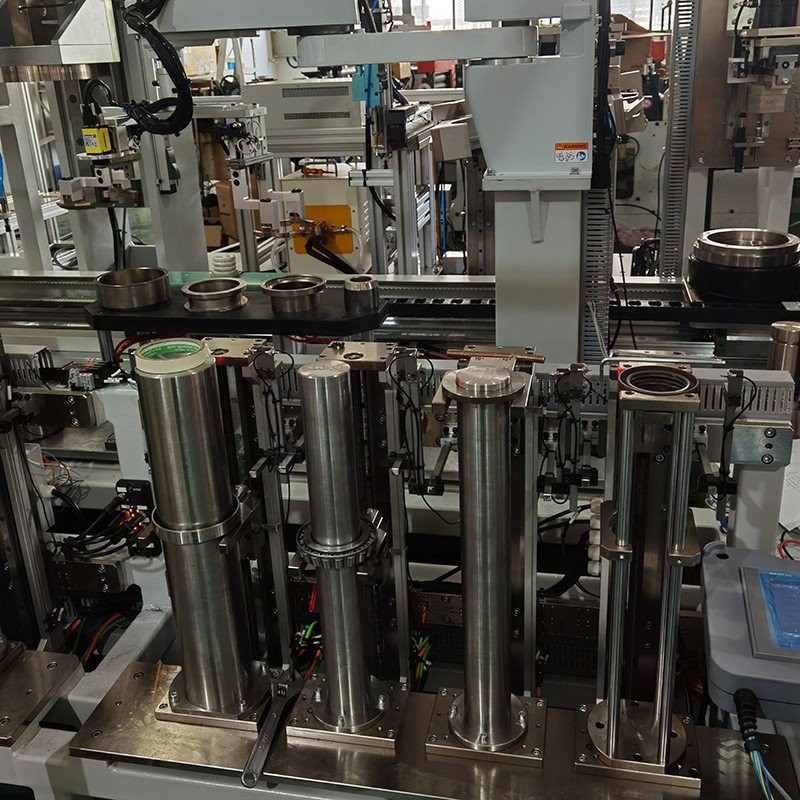
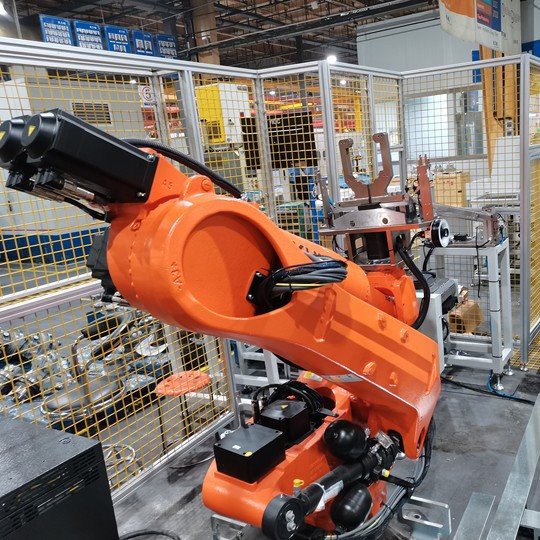
A gear reducer automatic assembly production line is a specialized equipment used for the mass production of gear reducers. It consists of a series of automated machines and conveyors that perform various assembly operations, such as gear meshing, bearing installation, and housing assembly. The production line can significantly improve the production efficiency and quality of gear reducers, while reducing the labor cost and human error.
Reducer Bearing Servo Press Machine
A reducer bearing servo press machine is a precision equipment used for the installation of bearings in gear reducers. It uses a servo motor to control the pressing force and displacement, ensuring the accurate and reliable installation of bearings. The servo press machine can improve the assembly quality and efficiency of gear reducers, while reducing the risk of bearing damage and failure.
Hydraulic Valve Seal Assembly Machine
A hydraulic valve seal assembly machine is a specialized equipment used for the assembly of seals in hydraulic valves. It uses a series of automated machines and tools to perform various assembly operations, such as seal insertion, compression, and inspection. The assembly machine can improve the assembly quality and efficiency of hydraulic valves, while reducing the labor cost and human error.
Conclusion
The hydraulic industry is a complex and dynamic field that relies on a wide range of production equipment. From hydraulic pumps and cylinders to motors and valves, each component plays a crucial role in the operation of hydraulic systems. In addition, the assembly and production line equipment are essential for the mass production of hydraulic components, improving the efficiency, quality, and productivity of the manufacturing process.
As a supplier of hydraulic industry production equipment, I am committed to providing high-quality products and services to our customers. We offer a comprehensive range of hydraulic components and assembly equipment, designed to meet the diverse needs of the hydraulic industry. If you are interested in our products or have any questions, please feel free to contact us for a purchase negotiation. We look forward to working with you to achieve your goals in the hydraulic industry.
References
- Fluid Power Handbook, edited by the Fluid Power Society.
- Hydraulic System Design and Application, by John F. Gillespie.
- Industrial Hydraulics, by Joseph A. Scheidler.