Operating Procedures and Usage Methods for Automotive Air Conditioning Assembly Lines
In modern automotive manufacturing, air conditioning systems have become standard equipment, and their performance directly impacts driving and riding comfort. The automotive air conditioning assembly line is a highly automated, streamlined, and precision-engineered production system that ensures the high quality and consistency of every air conditioning assembly unit.
The production process typically begins with the assembly of the core component: the compressor. The compressor serves as the "heart" of the air conditioning system, responsible for driving the circulation of the refrigerant. At dedicated workstations, workers or robotic manipulators clean, inspect, and assemble precision-machined components-such as cylinder blocks, pistons, and valve plates-followed by sealing tests and preliminary performance checks.
Next, the condenser and evaporator-the two primary heat exchangers-enter the main assembly line. The condenser is responsible for dissipating heat, while the evaporator handles heat absorption and cooling. These units are constructed from aluminum flat tubes and fins joined via a brazing process; the production line subjects them to rigorous pressure and leak tests to ensure there is absolutely no leakage.
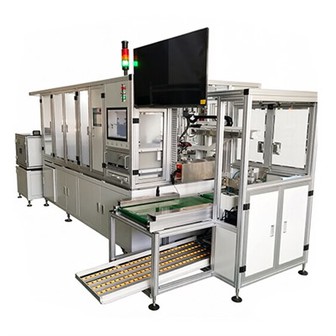
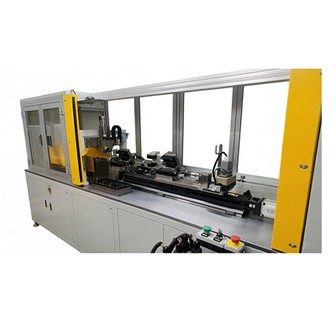
Subsequently, all individual components converge at the final assembly line. Here, the compressor, condenser, evaporator, expansion valve, receiver-drier, and the intricate network of tubing are systematically integrated into a complete air conditioning module. The assembly process relies heavily on automated tightening equipment to ensure that the torque applied to every single bolt meets precise specifications.