Technical Upgrade Plan for Automotive Tubing Automated Production Lines
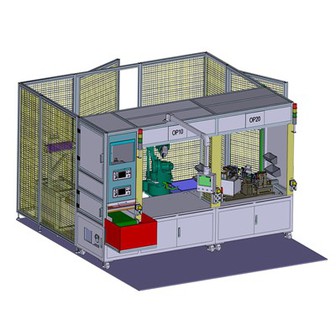
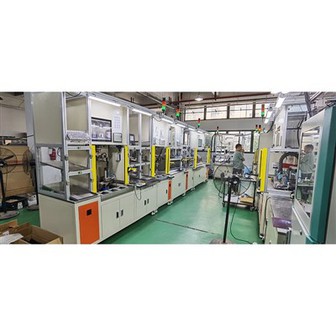
An automated production line for automotive tubing is a highly efficient, integrated system specifically designed for the manufacturing of tubing components for vehicle braking, fuel, cooling, and air conditioning systems. By automating processes such as loading and unloading, tube bending, welding, inspection, and assembly, this production line enables the continuous transformation of straight tubing into complex, three-dimensional pipe assemblies, thereby significantly boosting manufacturing efficiency and product consistency. Its core value lies in meeting the automotive industry's rigorous demands for high reliability, lightweight design, and rapid delivery.
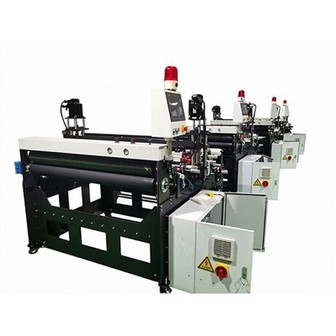
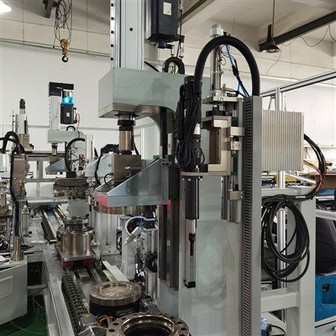
From a technical standpoint, this production line typically centers around multi-axis CNC tube bending machines, complemented by automatic feeding mechanisms and robotic gripping systems to ensure precise positioning and continuous bending of the tubing material. Some systems also integrate laser welding or resistance welding units to guarantee joint strength and leak-tightness. The control systems predominantly utilize PLCs (Programmable Logic Controllers) and HMIs (Human-Machine Interfaces), supporting one-touch switching of process parameters to accommodate the production of tubing for multiple vehicle models.
In practical application, automated automotive tubing production lines are widely deployed in the manufacturing of passenger vehicles, commercial vehicles, and new energy vehicles. For instance, within the thermal management systems of electric vehicles, the complex routing and high-precision requirements of battery cooling lines rely on automated production lines to ensure quality assurance. Concurrently, with the advancement of autonomous driving technologies, the safety redundancy requirements inherent in brake line design are driving manufacturers to adopt more reliable automated manufacturing processes.
While enhancing production efficiency, this production line also significantly reduces labor costs and the risk of workplace injuries. Traditional manual tube bending relies heavily on the experience of skilled technicians; in contrast, automated systems utilize programmed controls to ensure the consistency of every tube assembly, thereby minimizing rework and scrap rates. Furthermore, data acquisition capabilities allow for the recording of process parameters for each production batch, facilitating quality traceability and process optimization.
Looking ahead, as the trends toward automotive electrification and intelligentization accelerate, tubing systems will become increasingly complex, placing higher demands on the flexibility and intelligence of automated production lines. Integrating AI algorithms to enable process self-learning and predictive maintenance is poised to become a key developmental direction for the next generation of automated automotive tubing production lines.