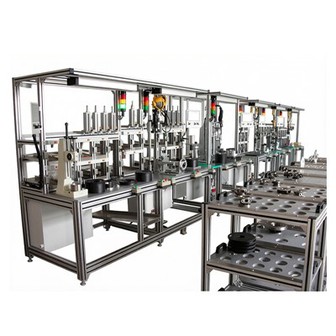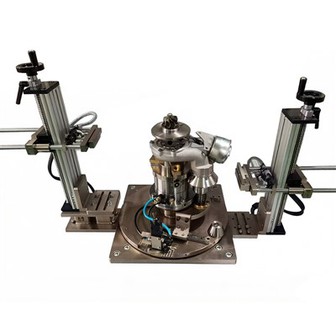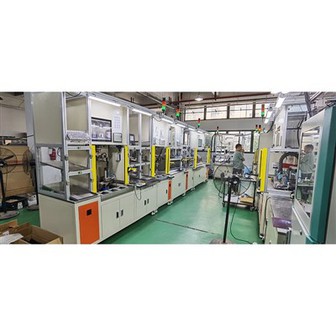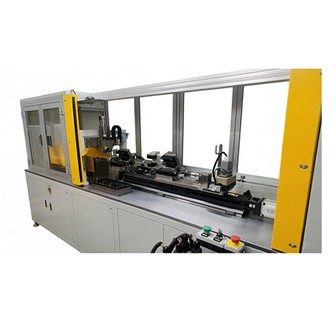
Automated production lines for automotive tubing are crucial for reducing hydrocarbon emissions.
The formation of air pollution and smog is closely linked to the emission of volatile organic compounds (VOCs). In addition to industrial pollutants, hydrocarbons emitted by automobiles constitute a significant source of VOC emissions. According to the *Annual Report on Environmental Management of Mobile Sources in China (2023)* published by the Ministry of Ecology and Environment, hydrocarbon emissions from motor vehicles in my country reached 1.912 million tons in 2022, representing a substantial component of total automotive emissions. Automotive hydrocarbon emissions consist of both tailpipe emissions and evaporative emissions. With the implementation of increasingly stringent tailpipe emission standards and the widespread application of tailpipe emission control systems, hydrocarbon emissions originating from tailpipes have been significantly reduced; consequently, evaporative emissions per vehicle have now surpassed tailpipe emissions, becoming the primary source of automotive hydrocarbon emissions. Generally, automotive evaporative emissions are generated through four distinct mechanisms: (1) Refueling emissions: emissions resulting from the escape of fuel vapors from the fuel tank during the refueling process; (2) Hot soak losses: emissions generated when residual heat from the engine and exhaust system causes the fuel tank temperature to rise after the engine has been shut off; (3) Diurnal losses: evaporative emissions of gasoline caused by fluctuations in ambient temperature; and (4) Running losses: emissions resulting from the evaporation of gasoline while the vehicle is in motion, driven by heat from the engine, exhaust system, and surrounding environment. In recent years, as my country's energy conservation and emission reduction policies have become increasingly rigorous, the regulatory limits on automotive hydrocarbon emissions have been continuously tightened. The "China 6" (National VI) standards, released in 2016, significantly tightened restrictions on automotive evaporative emissions; specifically, the emission limit for evaporative pollutant tests (covering hot soak and diurnal losses) was reduced from 2 g/test under the "China 5" standards to 0.7 g/test. Furthermore, a new test for refueling emissions was introduced, mandating that pollutant emissions during the refueling process must not exceed 0.05 g/L.
As conduits for the transport of media such as fuel and fuel vapors, automotive fluid lines play a critical role in reducing hydrocarbon emissions. These lines must possess key performance attributes-including excellent sealing integrity, high resistance to permeation, and low extractability-to effectively prevent hydrocarbons from escaping through the pipe walls or connections and contaminating the atmosphere. To address evaporative pollutant emissions, automotive fluid lines primarily enhance their permeation resistance-thereby preventing hydrocarbons from permeating through the line walls-by utilizing materials with high barrier properties; additionally, they improve the sealing integrity at connection points through the use of high-performance sealing mechanisms.