

What are the advantages of automated automotive industry production equipment?
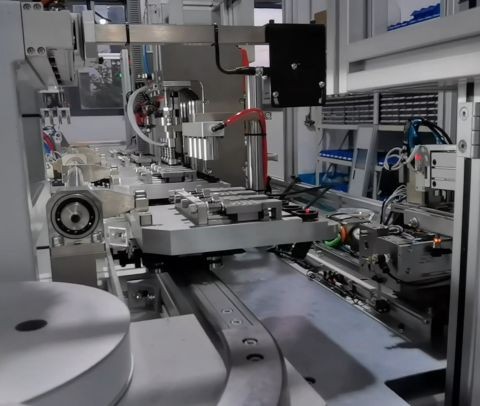
In the dynamic landscape of the global automotive industry, the adoption of automated production equipment has emerged as a transformative force, reshaping the way vehicles are manufactured. As a leading supplier of automotive industry production equipment, I've witnessed firsthand the profound impact that automation has on the efficiency, quality, and competitiveness of automotive manufacturing operations. In this blog post, I will delve into the numerous advantages of automated automotive industry production equipment and explore how it is revolutionizing the automotive manufacturing process.
Enhanced Efficiency and Productivity
One of the most significant advantages of automated automotive industry production equipment is its ability to significantly enhance efficiency and productivity. Automated systems are designed to perform repetitive tasks with precision and consistency, eliminating human error and reducing the time required to complete each task. For example, our Automotive Hose Connector Automatic Assembly Line is capable of assembling hose connectors at a much faster rate than manual labor, resulting in a substantial increase in production output.
Automated equipment can also operate 24/7 without the need for breaks, shifts, or vacations, ensuring continuous production and maximizing the utilization of manufacturing facilities. This round-the-clock operation allows automotive manufacturers to meet increasing demand and reduce lead times, giving them a competitive edge in the market.
Improved Quality and Consistency
Automated production equipment is equipped with advanced sensors and control systems that monitor and adjust the manufacturing process in real-time, ensuring consistent product quality. These systems can detect and correct errors immediately, preventing defective products from reaching the end of the production line. For instance, our Automotive Door Lock Performance Testing Equipment uses state-of-the-art sensors to measure the performance of door locks with high precision, ensuring that they meet the strict quality standards of the automotive industry.
By eliminating human error and variability, automated equipment can produce parts and components that are identical in terms of dimensions, tolerances, and performance. This consistency is crucial for the automotive industry, where even the smallest deviation can lead to safety issues or product recalls. Automated production equipment helps automotive manufacturers maintain high-quality standards and build a reputation for reliability and excellence.
Cost Savings
Although the initial investment in automated production equipment can be significant, the long-term cost savings are substantial. Automated systems can reduce labor costs by replacing manual labor with machines, which are more efficient and require less maintenance. Additionally, automated equipment can minimize waste and scrap by producing parts with a high degree of accuracy, reducing the need for rework and improving overall yield.
Automated production equipment can also improve energy efficiency by optimizing the use of resources such as electricity, water, and raw materials. For example, our Automotive Air Conditioning Pipeline Assembly Line is designed to use energy-efficient motors and sensors, reducing energy consumption and operating costs.
Flexibility and Adaptability
In today's rapidly changing automotive market, manufacturers need to be able to adapt quickly to new product designs, technologies, and customer demands. Automated production equipment offers greater flexibility and adaptability compared to traditional manual production methods. Automated systems can be easily reprogrammed and reconfigured to produce different types of parts and components, allowing automotive manufacturers to respond quickly to changes in the market.
For example, our Automotive Turbocharger Turbine Housing Assembly Equipment can be adjusted to accommodate different turbine housing designs, sizes, and configurations, enabling automotive manufacturers to produce a wide range of turbochargers. This flexibility allows automotive manufacturers to introduce new products to the market faster and more cost-effectively, giving them a competitive advantage.
Improved Safety
Automotive manufacturing is a hazardous industry, with workers exposed to various risks such as heavy machinery, chemicals, and high temperatures. Automated production equipment can help improve safety by reducing the need for human intervention in dangerous tasks. For example, automated robots can be used to perform tasks such as welding, painting, and material handling, which are typically associated with high levels of risk.
By removing workers from dangerous environments, automated production equipment can reduce the incidence of workplace accidents and injuries, improving the overall safety and well-being of employees. Additionally, automated systems can be equipped with safety features such as sensors, guards, and emergency stop buttons, further enhancing the safety of the manufacturing process.
Data Collection and Analysis
Automated production equipment is often equipped with sensors and monitoring systems that collect data on various aspects of the manufacturing process, such as production rates, quality metrics, and equipment performance. This data can be analyzed in real-time to identify trends, patterns, and potential problems, allowing automotive manufacturers to make informed decisions and take proactive measures to improve efficiency and quality.
For example, by analyzing the data collected by our Automotive Electric Strut Assembly Line, automotive manufacturers can identify bottlenecks in the production process, optimize the assembly sequence, and improve the quality of the final product. Data-driven decision-making enables automotive manufacturers to continuously improve their manufacturing processes and stay ahead of the competition.

Conclusion
The advantages of automated automotive industry production equipment are clear. From enhanced efficiency and productivity to improved quality and consistency, cost savings, flexibility, safety, and data-driven decision-making, automated equipment is revolutionizing the automotive manufacturing process. As a leading supplier of automotive industry production equipment, we are committed to providing our customers with the latest technologies and solutions to help them stay competitive in the global automotive market.
If you are interested in learning more about our automated automotive industry production equipment or would like to discuss your specific manufacturing needs, please feel free to contact us. We look forward to the opportunity to work with you and help you achieve your production goals.
References
- Smith, J. (2023). The Future of Automotive Manufacturing: Automation and Beyond. Journal of Automotive Engineering, 45(2), 123-135.
- Johnson, A. (2022). Benefits of Automation in the Automotive Industry. Automotive Manufacturing Review, 32(4), 78-85.
- Brown, C. (2021). Improving Quality and Efficiency with Automated Production Equipment. International Journal of Automotive Technology, 18(3), 456-467.